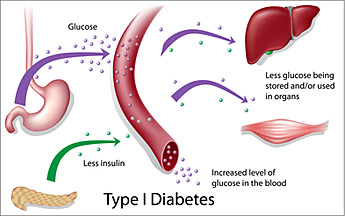
Diabetes mellitus is a syndrome characterized by disturbances of metabolism of carbohydrate, fat and protein. Fat metabolism disorder is common in both type I and type II diabetes mellitus.

SIGNIFICANCE OF DYSLIPIDEMIA IN DIABETES MELLITUS
Dyslipidemia is undoubtedly a major risk factor for coronary heart disease (CHD), about 75% of diabetics includes hypertriglyceridemia, low levels of high density lipoprotein
cholesterol, small, dense, triglyceride rich low density lipoprotein particles and an increase in Apolipoprotein - B . Apart from these glycation and oxidation of all lipoprotein disease is enhanced.
The role of triglyceride as a cardiovascular risk factor is debatable. Most studies demonstrated increased risk of coronary heart disease (VHD) with hypertriglyceridemia with univariate analysis. While others, taking into account other risk actors in multivariate analyses, do not.
In World Health Organization’s cross sectional multinational study of more than 1900 persons with diabetes, Plasma triglyceride levels were significantly related to CHD, independent of other risk factors.
The impact of serum total cholesterol levels on CHD appearsto be similar in diabetic and non diabetic individuals .Multiple risk factor intervention trial has shown that cardiovascular risk related to serum total cholesterol was much higher in those with diabetes than in those without diabetes at all levels of cholesterol.
Composition of low density lipoprotein particles in diabetes mellitus is altered, resulting into small dense, triglyceride rich particles. Although such particles have been associated with CHD in general population, no studies of this association in diabetes have been reported so far.
Levels of High Density Lipoprotein Cholesterol are uniformly low in untreated patients with Type I DM and Type -II DM. Most studies show an association between low levels of high density lipoprotein cholesterol and CHD in both type I and Type II DM individuals.
The Framingham study showed that High Density Lipoprotein Cholesterol levels were inversely related to CHD in diabetic population, as in the general population .
Thus dyslipidemia in diabetes is strongly associated with accelerated atherosclerosis Which is the cause for macrovascular complications of diabetes such as cardiovascular disease, cerebrovascular disease, peripheral vascular disease. Other lipoprotein related risk factors for CHD in diabetes mellitus include lipoprotein a [La(a)] and Apo B, Lp(a) is a unique molecule comprising a lipoprotein particle resembling LDL cholesterol that is covalently bonded to apo (a), a large plasma glycoprotein. The individual characteristics of these two components are thought to be responsible for the apparent pathogenic role of Lp(a) which has no known physiologic function. The LDL cholesterol component likely contributes to atherogenesis, where as apo(a), similar in structure to plasminogen, may promote thrombosis. Thus LP(a), which has been isolated in the arterial wall at sites of atherosclerosis, may serve as a link between the pathogenetic processes of atherosclerosis and thrombosis.
Apolipoprotein (a), large glycoprotein that shares a high degree of sequence hemology with plasminogen is made by hepatocytes and is secreted into plasma where it forms a covalent linkage with apo B 100 of LDL to form lipoprotein (a) is not known, but elevated levels are associated with an increased risk for atherosclerosis. Recent preliminary reports suggest that Lp(a) levels may be altered by glycemic control in diabetic subjects
and that Lp(a) level are increased in diabetic patients with either micro or macroalbuminuria (31), the alteration that may in past explain the increased CHD risk associated with proteinuria . Lipoprotein (a) is an independent risk factors for coronary
artery disease in NIDDM patient in South India. A article published in 1998. They reported that Lp(a) levels were significantly higher in NIDDM. Patients with CAD compared with NIDDM patients without CAD and control subjects.
1) Lp(a) in NIDDM : Concentration are probably elevated.
Concentrations are probably related to metabolic control.
Concentrations are increased with microalbuminuria.
2) Lp(a) in NIDDM : Concentration are not elevated.
Concentrations do not change with metabolic control.
3) Lp(a) and CHD in diabetes: Little current evidence shows
that Lp(a) is a risk factor for CHD in diabetes.
SM Haffner et al studies Lp(a) concentrations in NIDDM. NIDDM patients have two to four fold increased risk of CHD relative to diabetic subject. This excess risk is explain only partially by increased levels of standard risk factors. Duration of diabetes
and level of fasting glycemia were not significantly higher in patients who had higher total and LDL cholesterol levels. They conclude that in a large population based study, Lp(a) levels are not increased in NIDDM patients . DL rainwater, JW Lacclueer et al found that the diabetic group had significantly lower Lp(a) concentrations than the non
diabetic subjects.
Ron C. Hoogeveen, Jasvinder K. Gambhir et al suggested that elevated plasma Lp(a) confers genetic predisposition to CHD in Asian Indians, and nutritional and environmental factors further increase the risk of CHD. Including Lp(a) concentration and App(a) phenotype in screening procedures may permit early detection and preventive treatment of CHD in this population . Apolipoproteins are protein moiety of a lipoprotein is known as an apolipoprotein. The apolipoproteins provide structural
stability to the lipoproteins and determine the metabolic fate of the particles upon which they reside. They were names in an arbitrary alphabetical order and, for the purposes of this discussion, will be described in relation to their association with lipoprotein classes.
Apo Al, All and A IV are found primarily on HDL. There are two forms of apoB- apo B100 and apo B48. apo B100 is the major apolipoprotein of VLDL, IDL and LDL comprising approximately 30,60 and 95% of the protein in these lipoproteins, respectively.
Plasma levels of HDL cholesterol and Apo Al are inversely related to risk for CHD.
AM Wagner, A Perez, F Calvo et al studies that hyperapo (B) was found in almost half of the normochoiesterolemic type ll diabetic patients and was frequently associated with low HDL-C levels and hypertrilgyceridemia. Thus, given its independent association with cardiovascular disease and that it identifies high risk phenotypes in normocholesteralemic diabetes patients Apo-B should be used to evaluate the lipidic pattern of these patients.
Gonan Walldius, Ingman Jungner et al studied that Apo-B and Apo B/Apo Al ratio were strongly and positively related to increased risk of fatal myocardial infarction in men and women. Apo Al was noted to be protective. Apo-B was a stronger predictor of risk than LDL-cholesterol in both sexes .
Allan D Sniderman, MD, Thea Scantiebury et al showed that abnormalities in insulin and glucose metabolism do not seem to entirely account for the high frequency of cardiovascular disease in patients with type II diabetes mellitus. An important additional
factor may be hypertriglyceridemic hyperaop-B are hyertriglyceridemia, low levels of high' density lipoprotein cholesterol; and increased number of small, dense low density apoprotein cholesterol (LDL) particles.
H. Tineke Westerveld; Jeanine E, Roetersvan Lennep; et ai showed that Apo-B, chol, LDL- chol, HDL -chol, and TG were independently related to CAD. In the lowest quartiles of chol, LDL chol, and TG, CAD positive women had higher apo-B concentrations than CAD negative women. In contrast, chol, LDLchol, TG, or HDL-chol levels were not different in any quartiie of apo-B. apo-B showed the most significant relation with the number of stenotic vessels, and apo-B was associated with CAD in the
ormolipidemic subgroup. In conclusion, apo-B was superior to chol, LDL-chol, HDL-chol, TG and Apo-AI in discriminating between CAD positive and CAD negative .
Benoit Lamarche, Sital Moorjani et a! showed that Apo-B may be regarded as a relevant tool in the assessment of CHD risk in men, because it may provide information that would not be obtained form the conventional lipid-lipoprotein profile .Mikko Syvanne, Juhanikahri et al showed that Apo All containing lipoproteins and HDL-3 cholesterol are powerfulmarkers of CAD in men with N1DDM . Carmine et al studied silent marker for assessment of asymptomatic coronary artery disease in apparently uncomplicated
type II diabetic patients. They found high Lp(a) in CAD groups.
M Laakso, Slehto et al studied the association of lipoprtein fractions with the further risk of coronary heart disease in patients with non insulin dependent diabetes, they found that low LDL and HDL, cholesterol, high VLDL chol, and high total and VLDL
triglycerides are powerful risk indications for CHD events in patients with NIDDM .
In the past vast number of studies have shown that dyslipidemia usually in the form of increased cholesterol levels in the blood is a predisposing factor for accelerated atherosclerosis atherosclerotic vascular disease is the major cause of mortality and morbidity in diabetes . Thus dyslipidemia in diabetics, acts as an independent factor for various diseases which occur more commonly in diabetic individuals than in non diabetics individuals such as coronary artery disease (AD), cerebrovascular disease, peripheral vascular disease etc. Framingham study and Joslin clinic study ( have shown that incidence of CAD in diabetic subjects is two to three times more as compared to that in non diabetic individuals. Paris prospective study,Tecumseh study and Chicago Heart association detectionprojedt have shown a relation between asymptomatichyperglycemia and cardiovascular risk. These studies strongly
suggest that asymptomatic hyperglycemia is an independent risk factor for CAD. Tecumsch study has shown that although diabetes was a statistically significant independent risk factor for mortality due to CAD, an elevate blood glucose level in those
individuals without diagnosis of diabetes also was associated with increased mortality due to CAD. Chicago Heart association detection project states that both diabetes and asymptomatic hyperglycemia were associated with increased mortality from CAD. Like CAD, cerebrovascular disease is also more common in diabetic individuals than in non diabetic individuals. Polumbo PJ et al and Abbott et al have suggested that incidence of
cerebral infarction in diabetic individuals is one and half times to two times more common than in persons without diabetes. Framingham study indicated an increased risk of cerebral infarction in individuals with an even slight intolerance to
glucose. In a community based study in Rochester Minnesota the observed frequency of transient ischaemic events was three times greater than expected and the frequency of stroke was 1.7 times greater than expected among diabetic individuals.
Framingham study showed that incidence of peripheral vascular disease was four times higher in women with diabetes in comparison to persons without diabetes. Relative excess of clinical atherosclerotic diseases in patients with diabetes appear to be
more marked in women than in men, effectively eliminating the relative protection from atherosclerosis in non diabetic women in the middle years . Most studies conducted in the past on dyslipidemia in diabetes have been conducted in context with the coronary artery disease. Multiple risk factor intervention trial had shown that at every level of cholesterol, coronary heart disease risk of diabetic individuals exceeds that of non diabetic individuals by two to three times.
The commonest pattern of dyslipidemia in diabetes mellitus is manifested as
- Elevated levels of serum triglyceride.
- Low levels of serum high density lipoprotein cholesterol.
- Increased non high density lipoprotein cholesterol levels (low
density lipoprotein cholesterol and very low density lipoprtein cholesterol).
- Small, dense and cholesterol rich low density lipoprotein particles.
- Newer increased levels of Apo-B in normocholesterolemic patients.
This type of dyslipidemia is more prevalent among individuals with type 2 diabetes mellitus as well as in insulin resistant syndrome states as observed by Grensberg HN et al and Yoshino G et al. Gensberg noted that data form the Paris prospective study
were among the earliest to show increasing coronary heart disease mortality with progression from normal glucose tolerance to impaired glucose tolerance to diabetes mellitus. Paris prospective study also- showed that hypertriglyceridemia in individuals with diabetes mellitus was an important cardiovascular risk factors, particularly in individuals with hypechoiesterolemia.
Joglekar and coworkers studied the lipid profile in newly diagnosed type 2 patients withregard to levels of cholesterol, Triglyceride and non esterified fatty acid (NEFA). They concluded that triglyceride and NEFA were raised significantly in newly
diagnosed patients while cholesterol was not in comparison to controls.
In a Finish study, it was observed that elevated serum triglyceride levels and decreased high density lipoprotein cholesterol levels predicted coronary heart disease in well
characterized way in type 2 diabetic subjects. However after adjustment of high density lipoprotein cholesterol, neither serum total cholesterol nor very low density lipoprotein cholesterol or serum triglyceride predicted coronary heart disease. On observational studies, high density lipoprotein cholesterol maybe the best predictor of coronary heart disease in type 2 diabeticsubjects followed by serum triglyceride and serum total
cholesterol. Garg et al showed that dyslipidemia in diabetes was characterized by high serum triglyceride levels along with high serum total cholesterol levels and low levels of high density lipoprptein cholesterol.
Similarly Huth K, et al observed that the main feature of disordered lipid metabolism in diabetic individuals was hypertriglyceridemia. He did’t comment on serum total cholesterol and high density lipoprotein cholesterol. But stern MP, et al observed that characteristic lipid abnormalities in type 2 diabetic subjects were hypertriglyceridemia and low levels of high density lipoprotein cholesterol but with no changes in serum total
cholesterol levels. They also stated that adequate glycemic control could favourably alter lipid profiles in type 2 diabetic individuals. i.e. reduction in serum triglyceride levels and a rise in high density lipoprotein cholesterol levels, but regarding cardiovascular
mortality as an end point of diabetes, they observed no benefit of adequate glycemic control.
Chandalia HB, et al have observed hypercholesterolemia and hypertriglyceridemia both, in individuals with type 2 diabetes. They also recommended that diet of an
individual with diabetes should contain so much fat that he should get 30% of total calorie form fat and out of these 30% of total calories, 10% should be derived from each saturated fats, polyunsaturated fats and monounsaturated fats. The total
cholesterol, consumption should not exceed 300 mg per day. They also observed that regular exercise reduced the cholesterol and triglyceride concentrations in diabetic individuals. The effect on triglyceride was most pronounced.
Diabates Control and Complications Trial Research group have observed that hypertriglyceridemia was the most prominent feature of diabetic dyslipidemia. Authors also observed that most dyslipidemias in diabetic individuals resolve within 6-8 weeks of good metabolic control. Thus they recommended that an adequate control of blood glucose with any mode of treatment, be it a sulfonylurea, biguanide, insulin or combinations of these lowered lipid levels in the blood especially triglycerides. Patients
exhibiting persistent dyslipidemia despite of adequate control of blood glucose require hypolipidemic drugs.
Chan et al observed that post prandial hyperlipidemia was more common in individuals with diabetes meliitus in comparison to subjects with normal glucose tolerance. They
observed to that post prandial very low density lipoprotein cholesterol levels were raised while that of chylomicrons were similar when compared with the normal subjects. They suggested that this post prandial hyperlipidemia may also contribute to
atherosclerotic risk in patients with diabetes.
Pandit MK, et al and Lardinois CK, et al observed that antihypertensive agents (Beta blockers, thiazide diuretics) used to treat hypertension in diabetic individuals may adversely affect glucose tolerance lipid levels or both.
Gonen B, et al and Lopas- Virella MF et al observed that in Type 1 diabetics with pure diabetic dysiipidemia adequate insulin therapy often completely corrected all the diabetes associated lipid abnormalities.
Dunn F et al observed that when blood glucose levels of Type 2 diabetics were adequately controlled with suffonyiurea therapy, the accompanying elevated lipid levels were often reduced significantly as well but not to the desirable range insulin therapy also even when glucose was successfully controlled improved but did not normalize levels of triglycerides and other lipid subfractions in these patients . Since the classic risk factors do not account for the excess risk of atherosclerosis in diabetes Syvanne M et al has proposed that dyslipidamia associated with diabetes may be the cause of
accelerated atherosclerosis in Type 2 diabetes patients .
Kannel WB, et al , Taskien MR et al and Howard BV et al , during the different studies found that in patients with Type-2 diabetes mellitus with good or fair glycemic control, the concentrations of low density lipoprotein cholesterol were similar to
or slightly lower than those of non - diabetic individuals. However they found that two abnormalities characterized lipoprotein metabolism in Type 2 diabetes patients.
1. Fasting and postprandial concentrations of triglyceride rich lipoproteins especially very low density lipoproteins w.ere higher and.
2. Fasting and post prandial concentrations of high density lipoprotein were lower than among individuals without diabetes.
'Malmstram R et al suggested that insulin resistance may be the common basis for hypertriglyceridemia found in Type 2 diabetes. In the insulin resistant state there is impairment of the normal suppression of fatty acid release from adipose tissue in the
postprandial state consequently there is a continuous supply of free fatty acids to the liver and overproduction of very low density lipoprotein from these substrates. Secondly acute hyperinsulinemia as seen after a meal suppresses the production of large buoyant very low density lipoprotein particles in the liver in non diabetic people but not in persons with Type 2 diabetes.
Nathan DM et al during his epidemiological study of ardiovascular disease in type 2 diabetes mellitus, observed that apart from other risk factors such as poor glycemic control, insulin resistance, obesity, increased plasminogen activator inhibitor 1 dyslipidemia in the form of hyper triglyceridemia and small dense low density lipoprotein particles also played a major role causaiotn of cardiovascular disease in type 2 diabetic patients. Haffner SM et al has shown that despite of hypertriglyceridemia with low high density lipoprotein cholesterol levels being the most common pattern of dyslipidemia in Type 2 diabetic individuals, the median triglyceride level in Type 2 diabetic individuals was less than 200 mg/dl and85-95% of Type 2 diabetic
patients have triglyceride levels below 400 mg/dl.
Pan XR et al have shown that dyslipidemia among Asian diabetic subjects is not so prominent and their triglyceride and high density lipoprotein cholesterol levels are comparable to those of Western non diabetics. UKPDS 27 observed that the effect of N1DDM on plasma lipid and lipoprotein levels is more pronounced in women than in men. This may explain in past why the cardiovascular riskis proportionally higher in females.
M. Uusitupa, 0 Siitonen et al studied serum lipids and lipoproteins in newly diagnosed type II diabetic patients. They found that the serum total cholesterol levels in diabetic and non diabetic subjects were similar, but the HDL cholesterol levels were
lower and the serum total triglyceride levels higher in the diabetic than in non diabetic subjects. No significant differences were found . in Apoprotein Al and A-ll levels between the diabetic and non diabetic subjects.